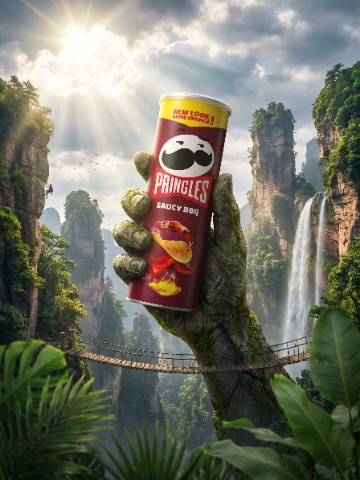


Tropical Oasis
Pinterest is a search engine for ideas, and a Pin keeps working for months. Product imagery that does well there looks like an idea, not an advert: a product in a beautiful, specific setting, vertical, with room to breathe. These templates are composed for exactly that.
212 templates
53 templates
17 templates
111 templates
31 templates
Channel Guide
Pinterest's own creative guidance recommends vertical Pins at a 2:3 ratio — 1000 × 1500 px is the standard — and vertical imagery consistently occupies more of the feed than square. The other structural fact about Pinterest is time: a Pin is discovered through search and re-saves long after it was published, so a single strong image can send traffic for a year. That changes what "good" means — a Pin should be timeless rather than topical, and beautiful rather than loud.
What gets saved is aspiration with a product in it. A skincare bottle on sun-warmed stones, a candle in a winter window, a bag on a café table: the scene is the reason to save, and the product rides along. Pure packshots on white perform poorly here because there is nothing to aspire to. Lifestyle templates — and especially seasonal ones — are the right instrument for Pinterest.
Because Pins are found by search, the words matter as much as the image: a descriptive title and a specific description (the product, the setting, the use) give Pinterest something to match. Generating each product's scenes from one photo and pairing them with the template's own description makes a full board achievable in an afternoon rather than a season.
1000 × 1500 px is Pinterest's recommended Pin size. Square and landscape Pins are cropped and take less of the feed.
Pinterest users save ideas. A product in a beautiful, specific setting outperforms the same product on white every time.
Title and description are how a Pin is found for months. Name the product, the setting and the use — not just the brand.
For a reusable product-content workflow, 1080 × 1080 is a square preset, 1080 × 1350 is a 4:5 portrait preset, and 1080 × 1920 is a 9:16 vertical preset. These are working export choices, not universal upload limits. Pinterest recommends a 2:3 image such as 1000 × 1500. Preview the actual posting route because organic posts, API publishing and ads can have different requirements.
Seasonal campaigns fail on timing more than on creative: the visuals arrive when the season is already underway. Work from a fixed calendar — Valentine's Day, Mother's Day, back-to-school, Halloween, Black Friday, the December holidays — and have imagery ready four to six weeks before each moment for marketplaces and two to three weeks before for social. Produce each season's set from the same product photo restaged into seasonal scenes, so a full year of campaign visuals costs one photo shoot.
A perfume bottle is mostly transparent, so whatever is behind it becomes part of the product's appearance: keep the immediate backdrop simple and the liquid colour stays true. Caps are usually a different material to the glass and need their own light, so check both before committing to a setup. And because a buyer cannot smell the product, the scene is doing the describing — match the setting to the fragrance family (fresh, floral, woody, oriental) and the image explains the scent without a word.